You have no doubt seen headlines like these:

You might also have concluded this might have been true in the past (and maybe not even that) and probably isn’t true today. Well, I decided to check after a friend’s girlfriend asked. So what do we need?
- Some list of diseases, their prevalence and deaths.
- A matching list of funding for those diseases.
- The male vs. female % of cases/deaths of the diseases.
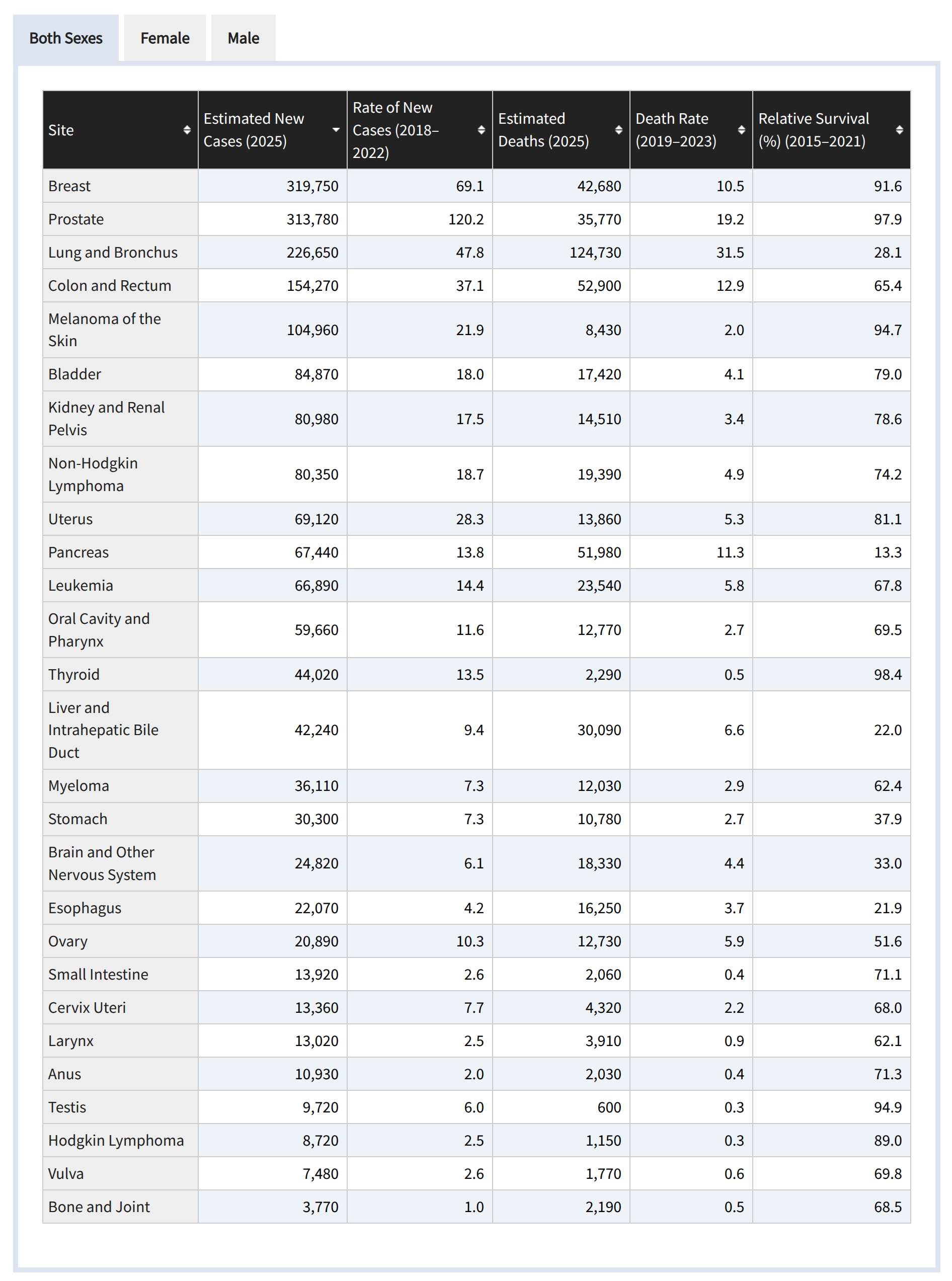
I decided to look at cancer to keep things fairly similar. There are a lot of cancer types, so possibly this is enough variation that we can use. For prevalence and death counts, I settled on US data from here:
And funding data from here, also US (American Cancer Society):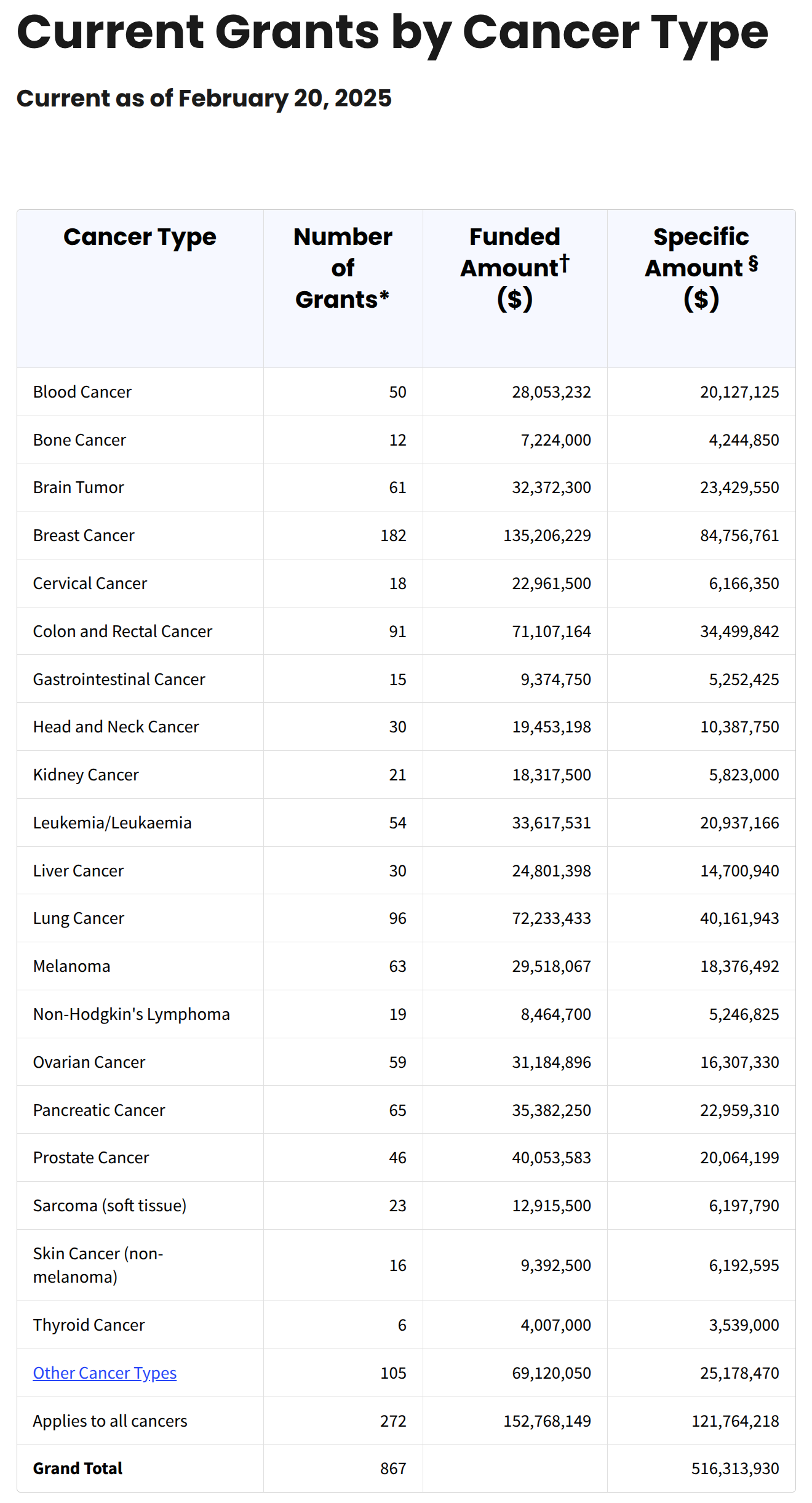
The lists don’t match up perfectly (22 types for funding, 19 for counts). I had GPT match them up, and the matchings seemed sensible enough (n=19). With this in hand, I computed the male % of cases and of deaths. Here’s the correlations:
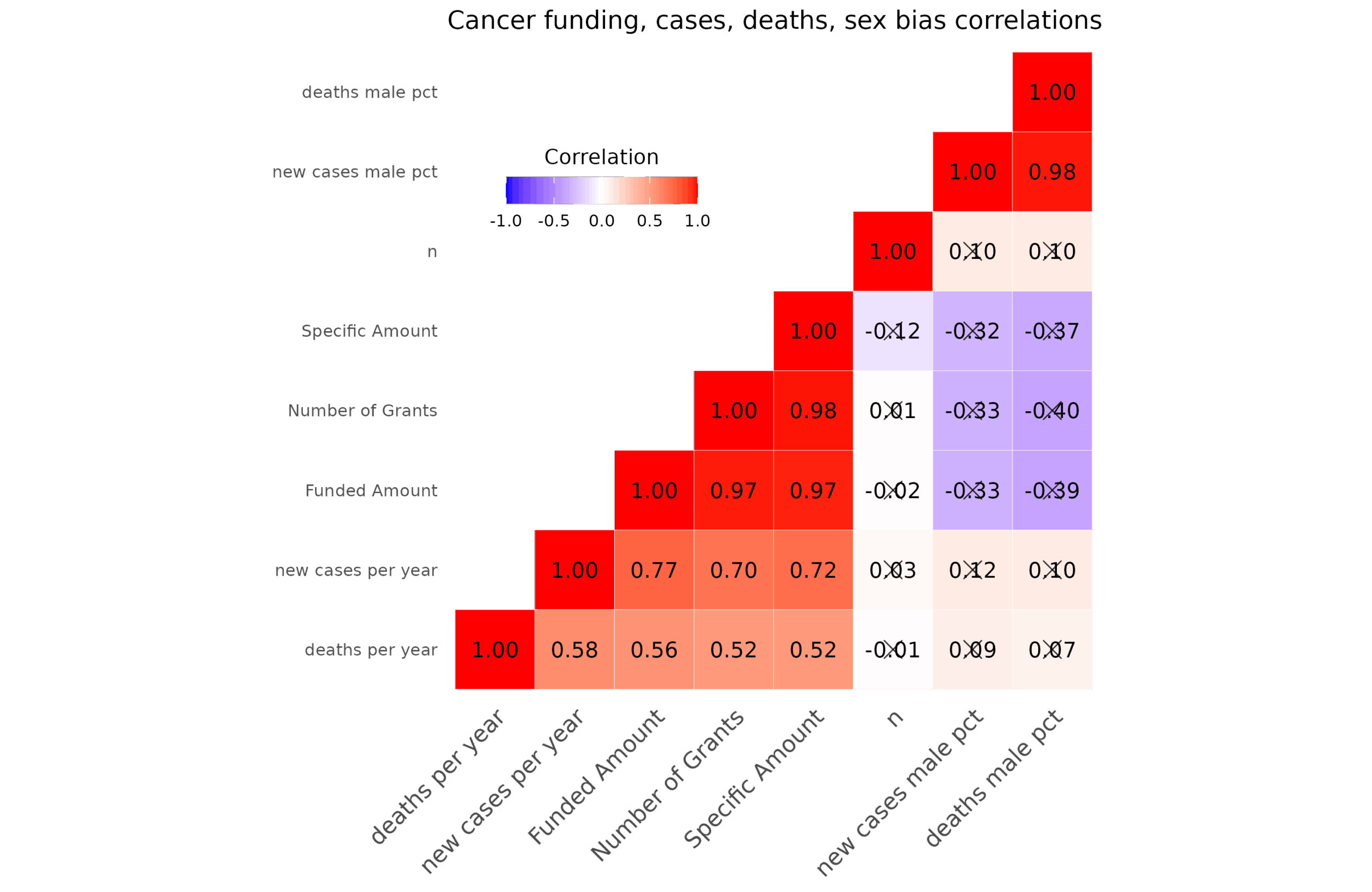
Generally, funding seems relatively sensibly allocated, correlating (funded amount) 0.77 with new cases per year and 0.56 with deaths. The correlations with male % of cases/deaths was -0.33 to -0.40, but p’s are around 0.09 to 0.18. Let’s have a look at the main primary and see if it makes sense:
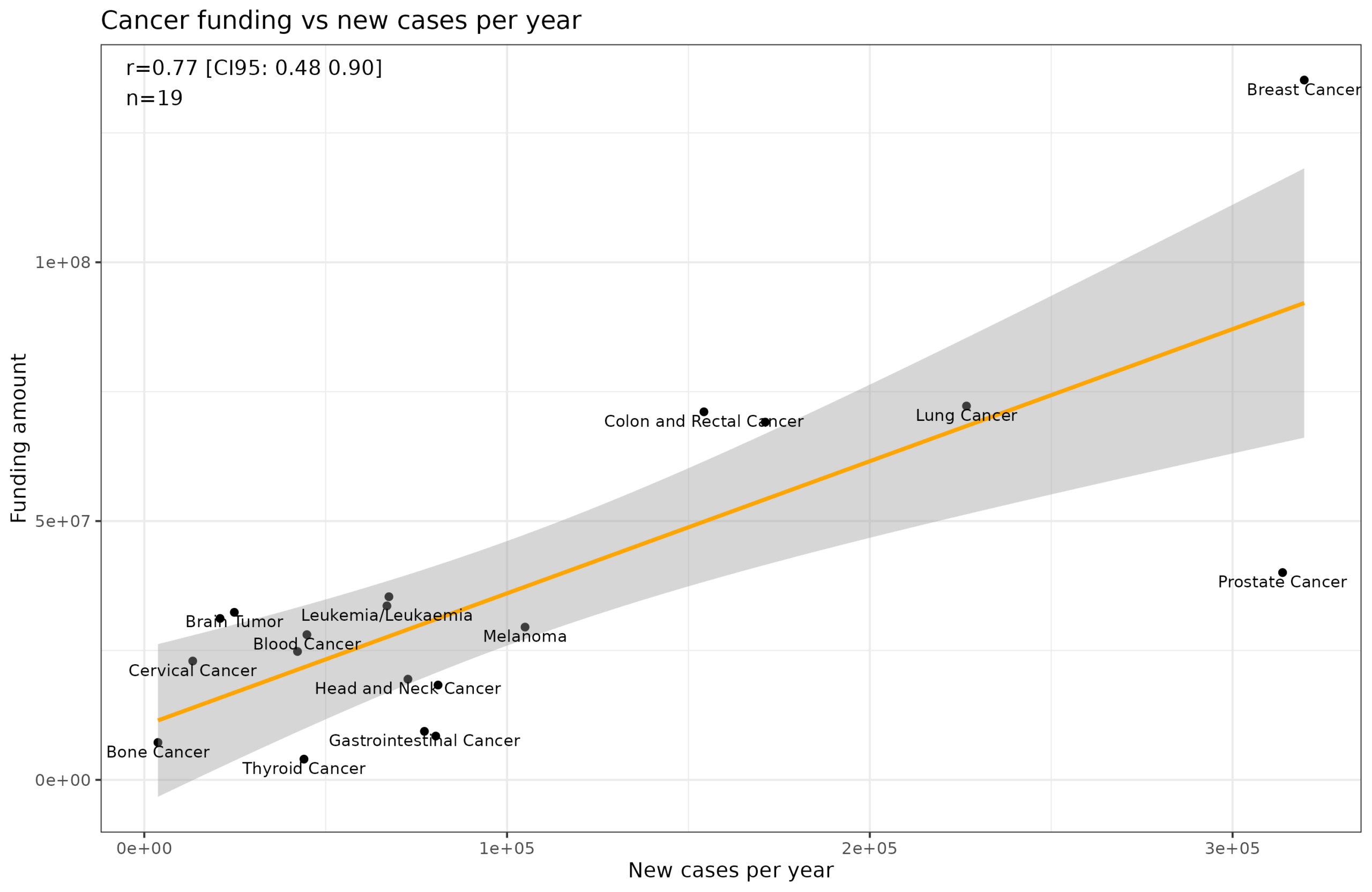
This look sensible enough, and here we can also see where the correlation with male % is from by comparing prostate (100% male) vs. breast (0.9% male). Here’s male % vs. funding:
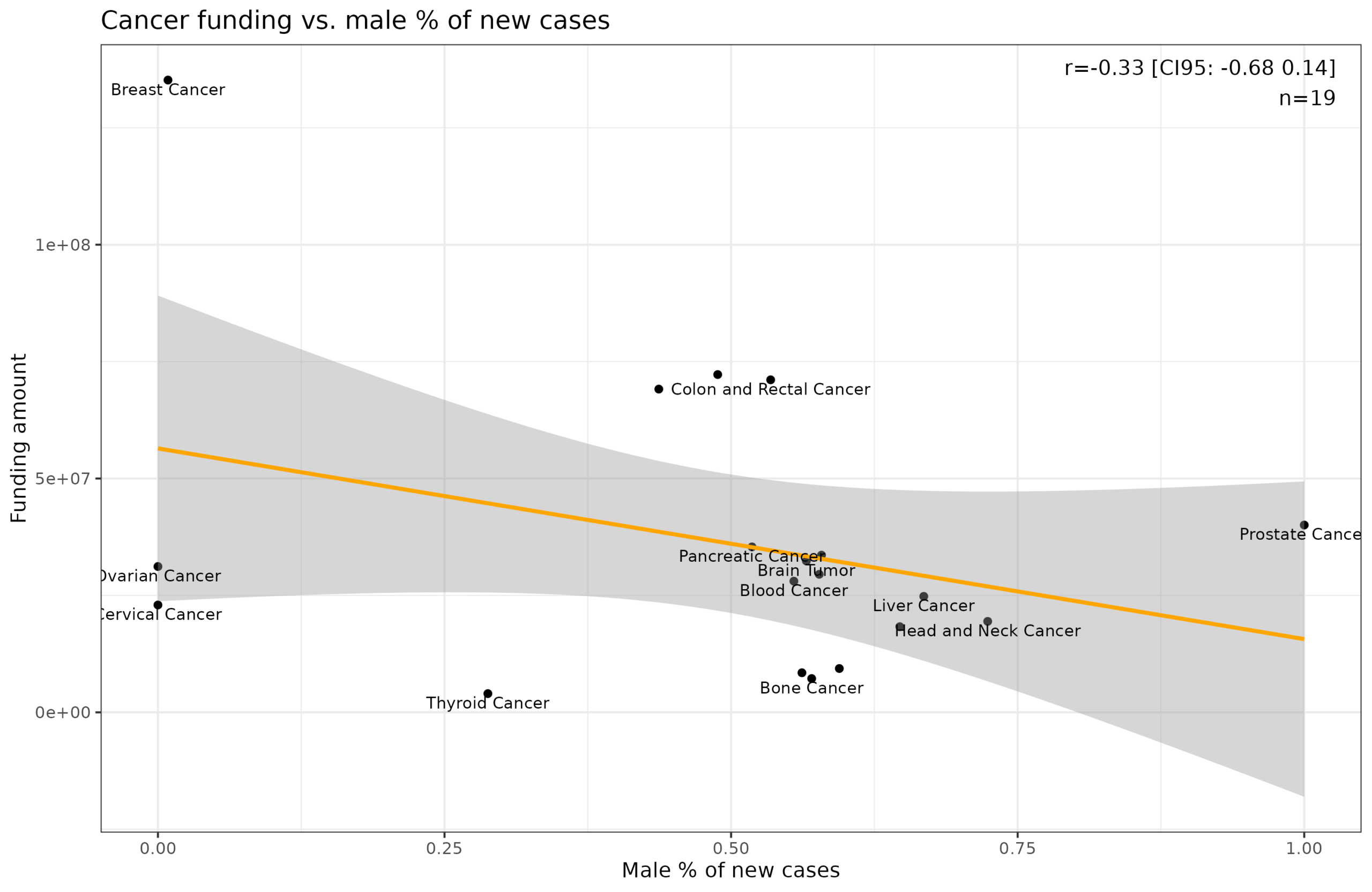
Female cancers appear to be overfunded compared to prevalences, or prostate cancer underfunded. Perhaps the most sensible way to model this is: funding ~ cases_per_year * male_pct_cases. This model yields:
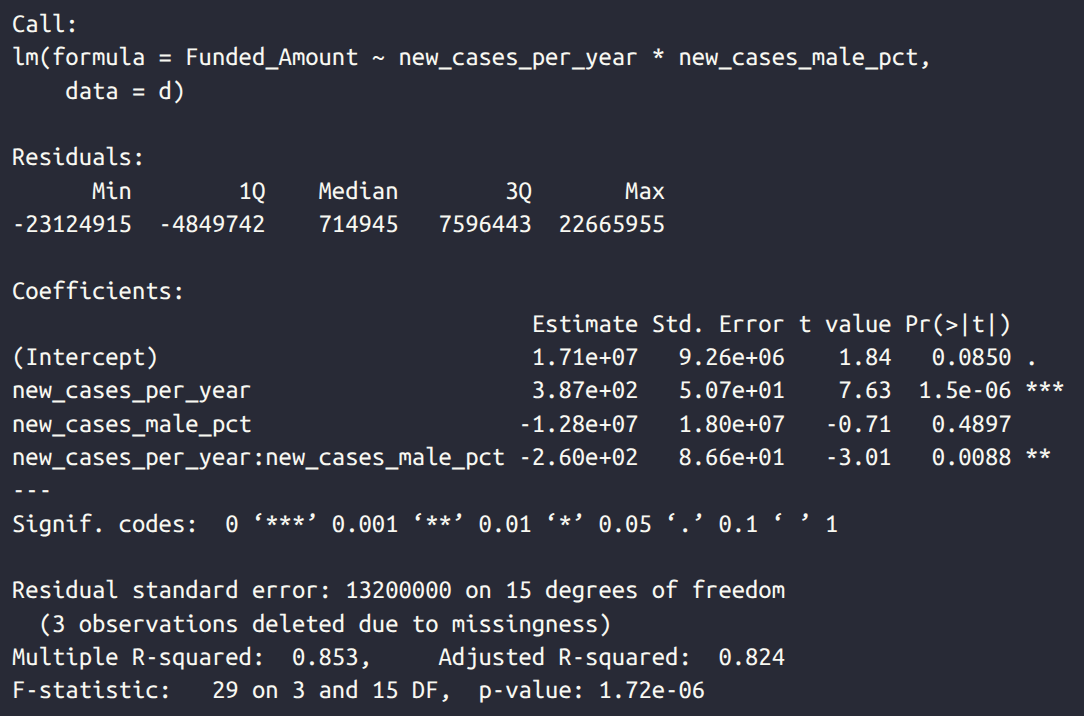
The interaction is p = 0.9% which is impressive considering we only have 19 cases (adjusted r² = 82%). The difference in slope tells us how much funding is allocated per new case a year, by sex. We can plot this to see the effect:
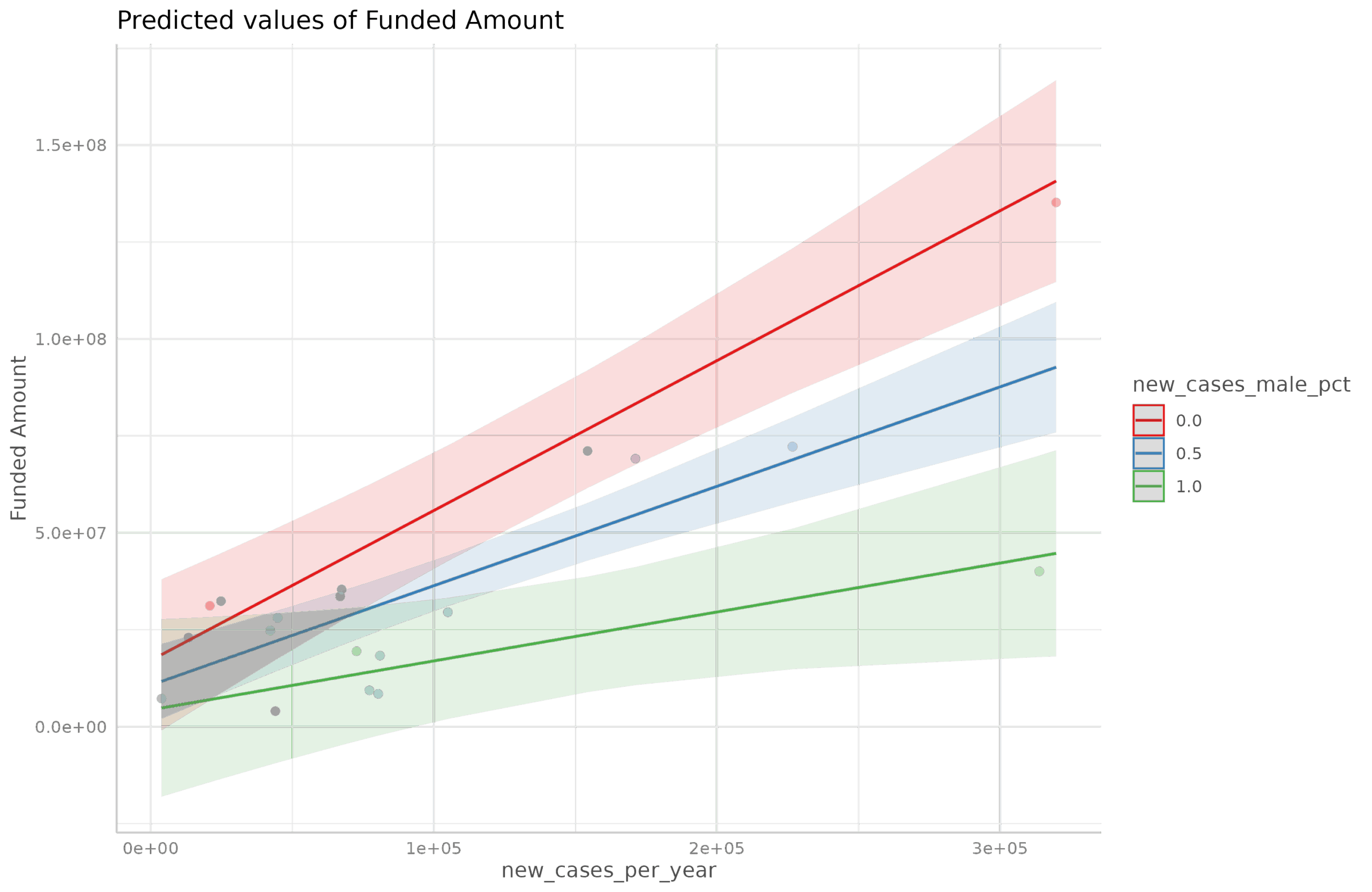
So, female cancers appear to be funded about 3x the ratio of the male ones. We can numerically verify this by computing the male and female implied slopes: 387 / (387-260) = 3.05.
But OK, maybe we need to look at the deaths instead of cases. One could make an argument this is more sensible, since some cancers may be scary and common, but not so dangerous. Alternatively, maybe they are not so dangerous because research into their treatment is well-funded. In any case, this is the model:
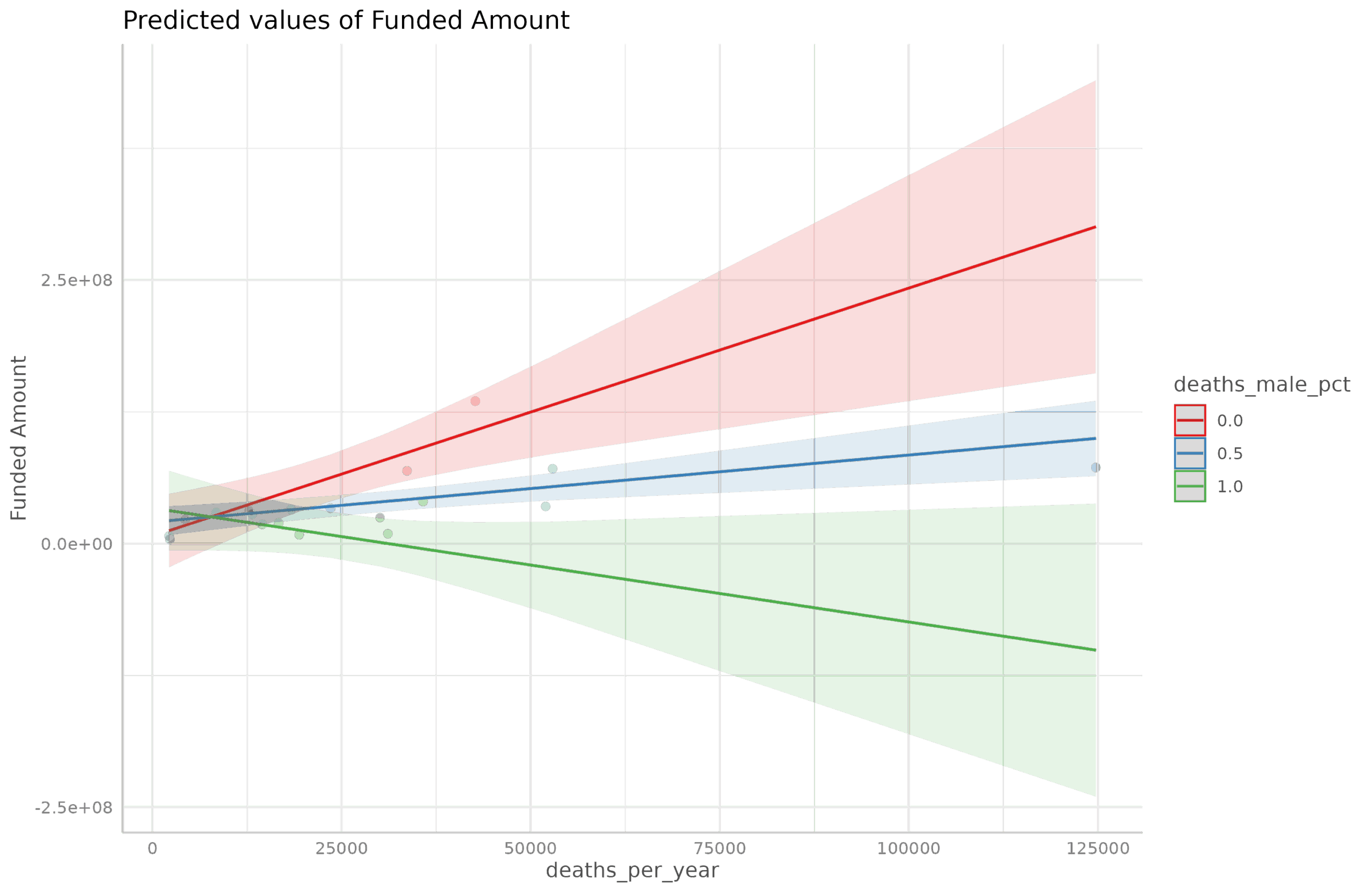
The interaction has p of 1.4%, slightly worse, but not bad for this data. The model even predicts that additional male deaths is associated with a decline in funding. The death model fit worse though (adj. r² = 60%), so it is probably wiser to use the cases model.
This is admittedly a rather crude study, but at least insofar as cancers are concerned, it appears there is half-decent evidence that research funding is unfair to men. The 3 female cancers breast, ovarian, cervical get about 135M, 23M, 31M = 189M USD in funding and kill about 70k people/year, thus, 2.7M/1k deaths, while the male cancer prostate gets 40M and kills about 36k/year, or 1.1M/1k deaths. Some of the rarer female cancers were put in the other category and one might want to change this (uterus, vulva) but they are relatively rare anyway (same is true for testis). Given the dataset above, the findings hinge entirely on the prostate cancer datapoint, so it would be wise to get a larger list of diseases.