The anti-boomer story goes like this:
- There was upon a time a happy, functional western civilization.
- Then came one generation who voted for a lot of welfare increases.
- The same generation also voted for a lot more low skill immigration.
- The same generation bought cheap housing which they didn’t put a lot of children in, thus blocking future generations from affordable homes near jobs.
The time-line doesn’t really work though. The boomers are, strictly speaking, those born in 1946 to 1964. The US immigration law was loosened in 1965, where most of these were too young to vote, being between 1 and 21 years old.
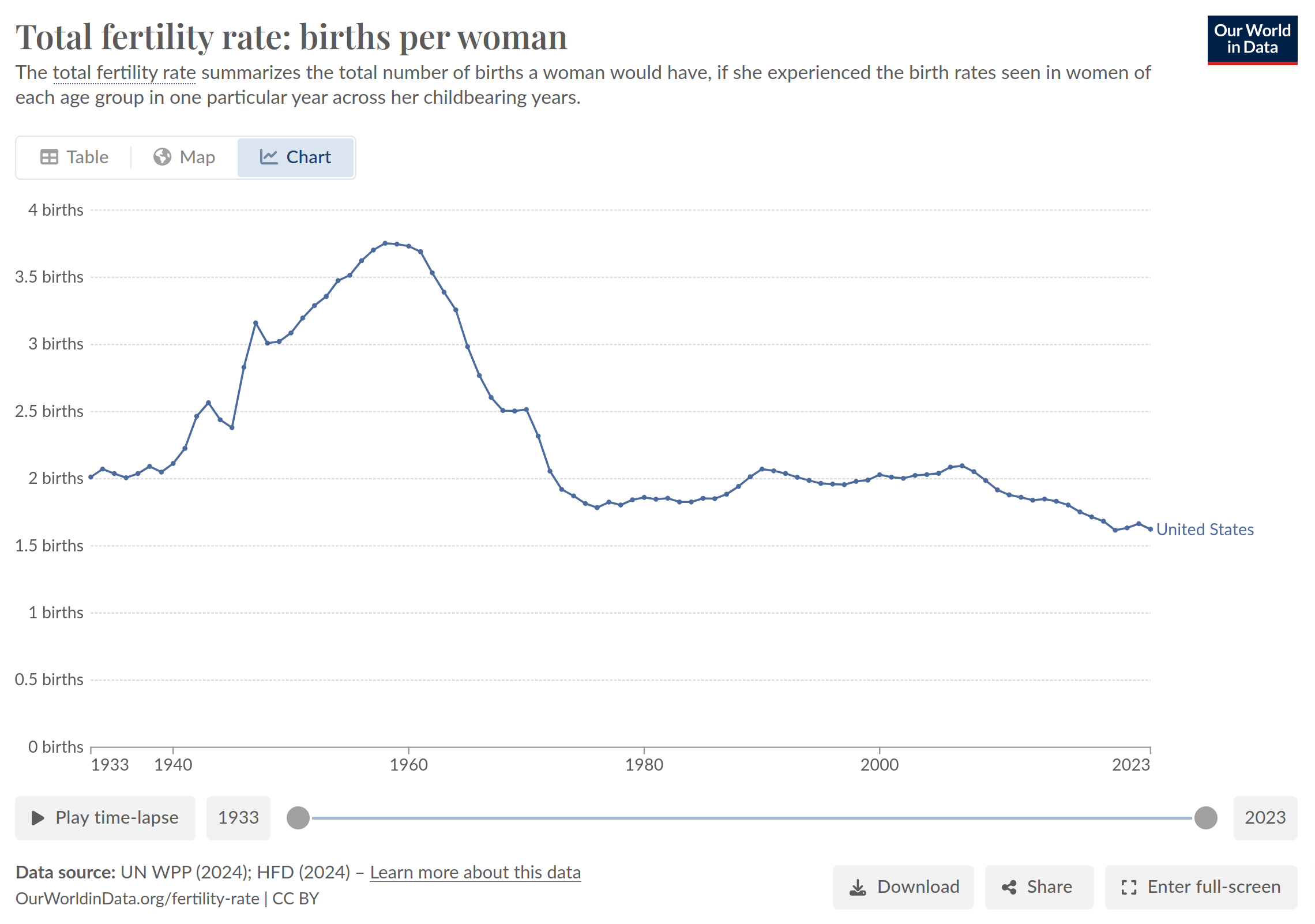
Also, fertility started declining in 1961 (start of end of baby boom) and again in 1970 (many changes).
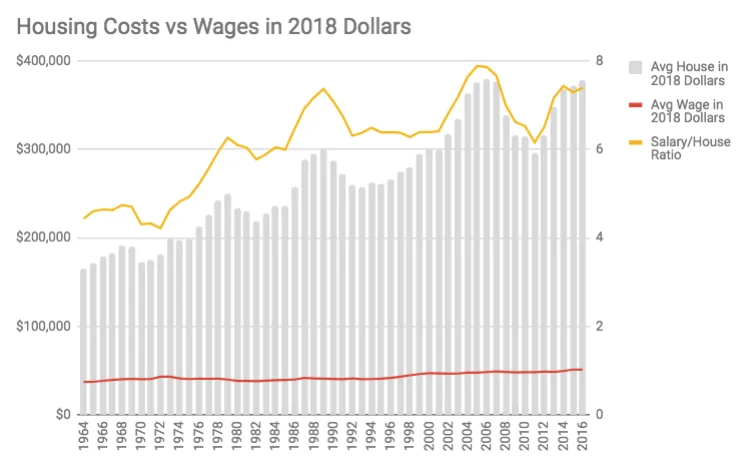
Housing costs have been increasing for many decades, it’s hard to find a time series that goes back further in time.
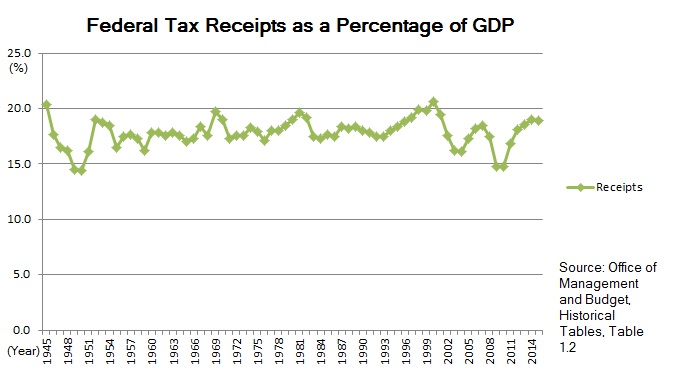
Also, the tax revenue as function of GDP has not risen.
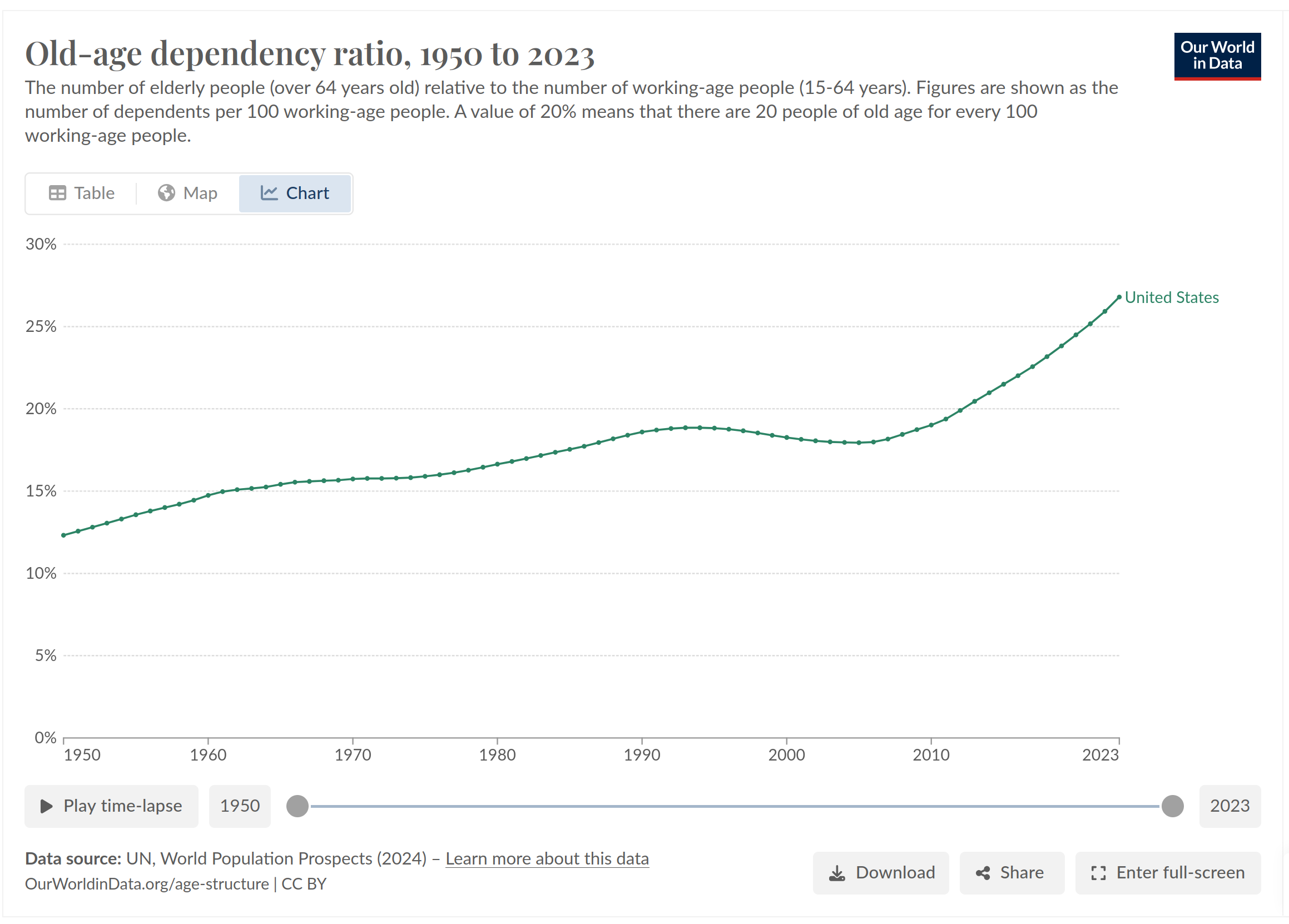
OK, maybe the story isn’t that boomers screwed everything up. However, it is true that the prior generations screwed everything up. The low fertility rate combined with a welfare state means that society the economic system becomes a pyramid scheme. The new generations must provide enough tax revenue from workers to pay for the pensions and healthcare of the older generations. The older generations become steadily larger as a fraction of the population due to the low fertility rate and improvements in longevity.
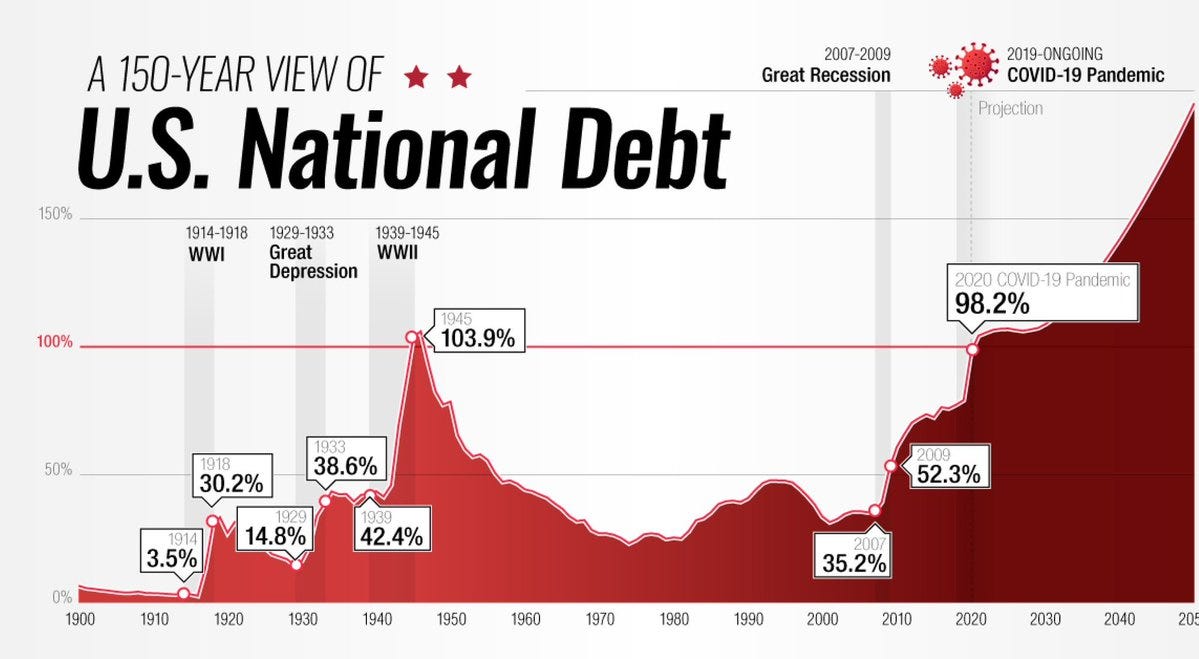
When the government doesn’t have enough money, it burrows it. Government debt goes up and up.
Even just paying the interest on the debt is now the same spending as the military.

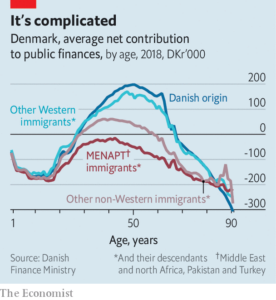
To offset this fertility and hence old age dependency problem, one can import new people. However, if these people are not as productive as the old people, the solution doesn’t work as well.
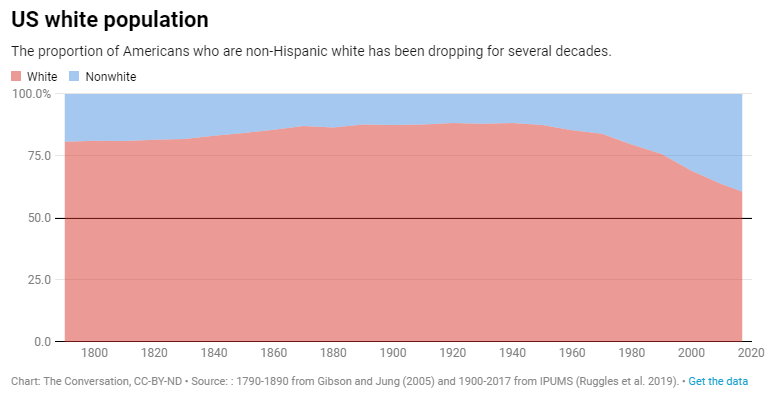
Of course, some of the non-Whites are high tier Asians, Indians etc. but most are below current average Latinos.
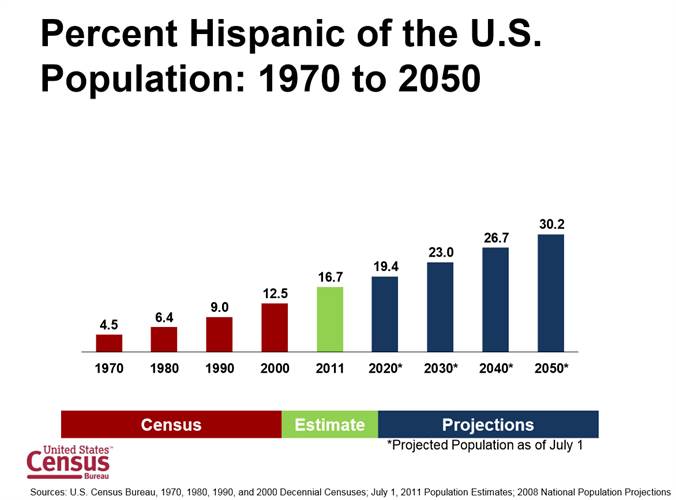
And in any case, when these migrants’ descendants’ fertility converge with the local fertility, the problem will appear anew, and a new even larger wave of migrants are needed, in perpetuity.
Is there a solution? In writing fiction, it is generally considered a bad solution to a plot hole. Suddenly, a new technology, magic, or some other miracle appears that solves everything. Deus ex machina. What could solve the above financial problem? It’s not unique to the USA.
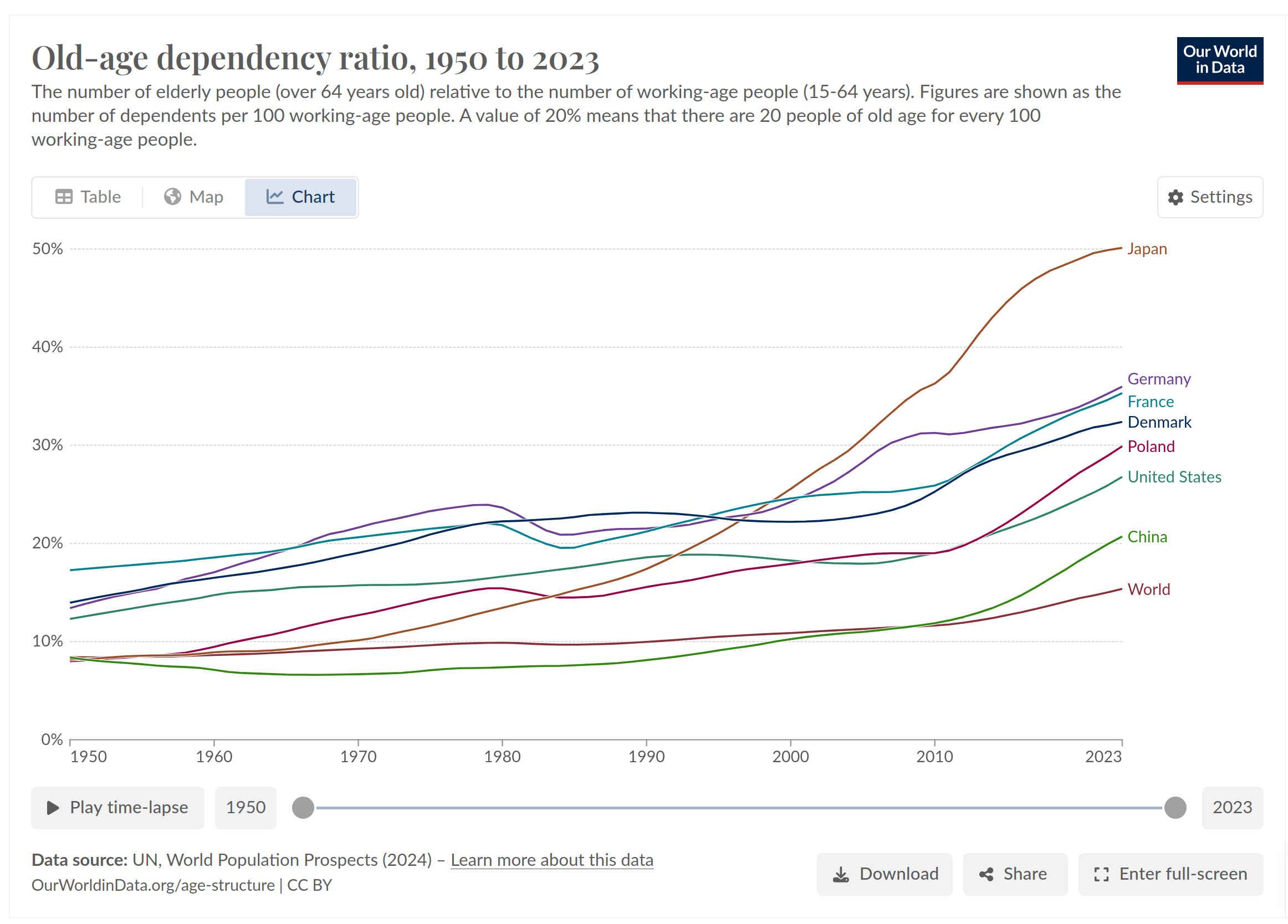
It is, in fact, not even the worst in USA because USA has imported so many new people and had relatively high fertility rates compare to other western countries. Well, the only thing that could conceivable save this situation is a huge increase in productivity of the new generation, unseen ever before. What could possibly cause this? We know productivity mostly is a function of cultural evolution, standing on the shoulder of the giants of the prior generation, and the technological accumulation from this, plus of course human capital. How could we get a sudden influx of one of these? Right, of course, artificial intelligence. The perfect deus ex machina, almost literally. AI will come in, supercharge technological development, produce near-free labor, which enables welfare for the remaining now mostly economically redundant humans (universal basic income), and everybody lives happily ever after.
It sounds a quite a lot too good to be true. It would be the most stunning technological rescue of any time in human history. I can’t say that this won’t happen given current AI development rates, but it was certainly not a wise gamble in the 1980s with ~1.5 fertility to hope that in the future near-magic technology would be invented causing so much technological growth that one could entirely ignore the fundamental economic problem of the welfare state pyramid scheme. We can’t really blame boomers for this problem, or any other single ‘generation’, but we can blame our recent ancestors for getting us into this problem. Aside from praying for AI gods, is there any hope? Fertility is declining so fast pretty much everywhere now that soon every welfare state on the planet will have the same problem. Macao has reached a depressive rate of 0.57 child per woman, about a quarter of the needed rate. But many others are not so far away. Chile, for instance, has almost caught up with South Korea, with an estimated 0.88 children/woman in 2024.