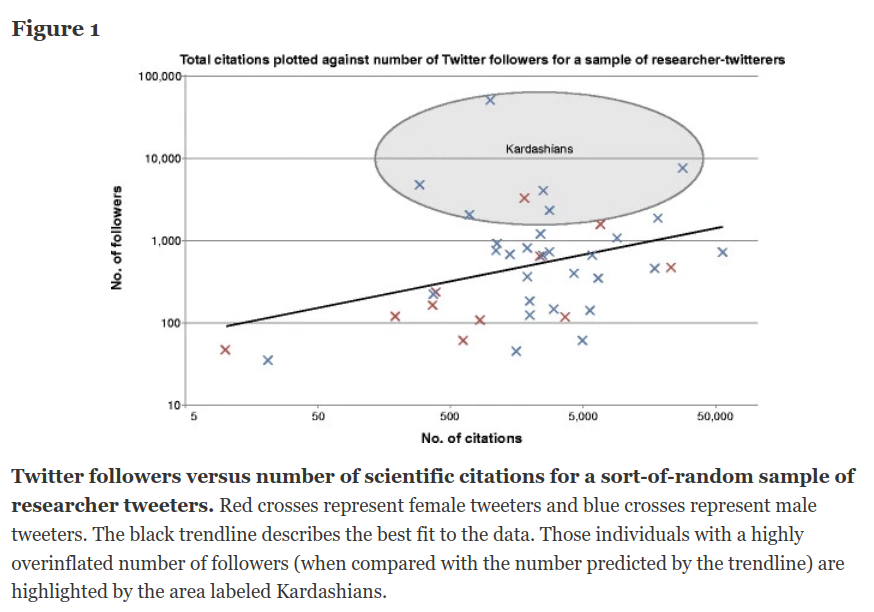
Due to popular demand, we do another one of these. The pattern is that of the Kardashian index. The idea of that is that often people from some group who attain a lot of fame are not actually good exemplars of that group. Rather, they seem to have put mostly their efforts into press management. I wrote about Adam Rutherford back in 2019. He’s a kinda sorta geneticist who is now an anti-European campaigner (he’s half-European), speaking at various genetics conferences, and writing popular books. He’s the slightly more clever male version of Angela Saini (see Thompson’s hilarious book review Superior Ideology). Yesterday I covered Sam Harris, as someone asked me about his status as a neuroscientist. This is not to say that I dislike Sam Harris. On the contrary. Still, pynte sig med lånte fjer, as we say in Danish. There’s a number of academic studies of the index of various groups of scientists, neuroradiologists, cardiologists, educationalists and so on (interesting case of COVID restriction experts in Denmark). The original 2014 paper provided this figure as an explainer:
The issue with the more automated version of the study is that Google Scholar numbers are not so clean. That’s because they are very inclusive so they include popular books, newspaper reports and so on, not mere academic research. They also don’t adjust for author role. Now a days in many fields, being the 57th author on some GWAS with 300+ authors is the sure-fired way to increase your citation count by a lot, though it should not affect your H-index so much. Still, many-author papers count equally to sole-author papers, and this distorts the H index as a measure of productivity towards people who do a lot of ‘social science’.
Due to this issue, it may be more informative to do case studies of high profile scientists. So let’s start with Neil Degrasse Tyson’s Wikipedia:
Neil deGrasse Tyson (US: /dəˈɡræs/ or UK: /dəˈɡrɑːs/; born October 5, 1958) is an American astrophysicist, author, and science communicator. Tyson studied at Harvard University, the University of Texas at Austin, and Columbia University. From 1991 to 1994, he was a postdoctoral research associate at Princeton University. In 1994, he joined the Hayden Planetarium as a staff scientist and the Princeton faculty as a visiting research scientist and lecturer. In 1996, he became director of the planetarium and oversaw its $210 million reconstruction project, which was completed in 2000. Since 1996, he has been the director of the Hayden Planetarium at the Rose Center for Earth and Space in New York City. The center is part of the American Museum of Natural History, where Tyson founded the Department of Astrophysics in 1997 and has been a research associate in the department since 2003.
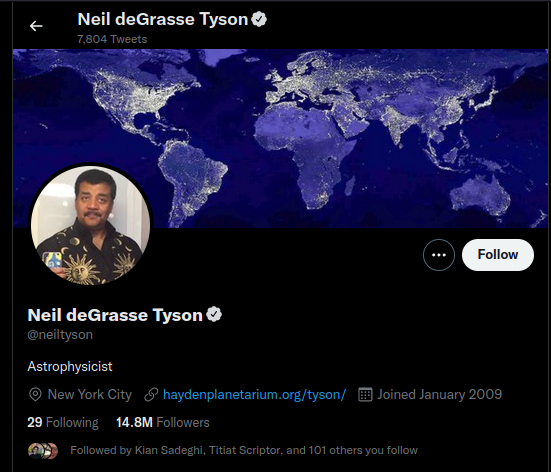

So I think it is fair to say that he sells himself as an astrophysicist and Wikipedia accepts this. In fact, I don’t see anywhere where he’s not described as such.
Let’s compare to his academic output. We start with Google Scholar. Well, he doesn’t have a profile. Researchgate? No, but there is an AI made one with 68 publications. Like Google Scholar these include all sorts of publications, books, magazine articles etc. How many are actual science? I went over all of them:
- Tyson, N. D. (1983). Simulated observations of bursting dwarf galaxies (Doctoral dissertation).
- Wikipedia: “he received an MA degree in astronomy in 1983. By his own account, he did not spend as much time in the research lab as he should have. His professors encouraged him to consider alternative careers and the committee for his doctoral dissertation was dissolved, ending his pursuit of a doctorate from the University of Texas.[20]”
- 0 citations, hidden from public view (weird?)
- Tyson, N. D., & Scalo, J. M. (1985, September). An Estimate of the Total Space Density of Dwarf Galaxies. In Bulletin of the American Astronomical Society (Vol. 17, p. 857).
- Talk
- 0 citations
- Tyson, N. D. (1986, September). Predictions and Observational Constraints for Models of Bursting Dwarf Galaxies. In Bulletin of the American Astronomical Society (Vol. 18, p. 1006).
- Talk
- 0 citations
- Tyson, N. D. (1987, March). Detached Supernovae From Undetected Dwarf Galaxies: Expected Rates from Star Formation Models. In Bulletin of the American Astronomical Society (Vol. 19, p. 686).
- Talk
- 0 citations
- Tyson, N. D. (1987, March). Detached Supernovae From Undetected Dwarf Galaxies: Expected Rates from Star Formation Models. In Bulletin of the American Astronomical Society (Vol. 19, p. 686).
- A talk from 1987 given while he was a lecturer at Uni. of Maryland.
- 0 citations
- Tyson, N. D. (1987, September). The Role of Tidal Encounters as the Trigger for Star Formation in Dwarf Galaxies. In Bulletin of the American Astronomical Society (Vol. 19, p. 1081).
- Talk
- 0 citations
- Tyson, N. D. (1988). On the possibility of gas-rich dwarf galaxies in the Lyman-alpha forest. The Astrophysical Journal, 329, L57-L59.
- Paper
- 63 citations
- Tyson, N. D., & Scalo, J. M. (1988). Bursting dwarf galaxies-Implications for luminosity function, space density, and cosmological mass density. The Astrophysical Journal, 329, 618-628.
- First author of 2
- 63 citations
- Phillips, M., Tyson, N. D., Rich, M., & Hamuy, M. (1989). Supernova 1989L in NGC 7339. International Astronomical Union Circular, 4798, 2.
- A talk I think
- 0 citations
- Tyson, N. D., & Rich, R. M. (1990). Spectroscopy and radial velocities of carbon stars in the Galactic bulge. In European Southern Observatory Conference and Workshop Proceedings (Vol. 35, pp. 119-125).
- Talk
- 1 citation
- Tyson, N. D., & Rich, R. M. (1990, September). The Abundance Gradient and Distribution in the Galactic Bulge. In Bulletin of the American Astronomical Society (Vol. 22, p. 1340).
- Another talk
- 0 citations
- Tyson, N. D., & Rich, R. M. (1991). Radial velocity distribution and line strengths of 33 carbon stars in the Galactic bulge. The Astrophysical Journal, 367, 547-560.
- First of 2 authors
- 44 citations
- Tyson, N. D. (1992). The Velocity Distributions of Stellar Species in the Galactic Bulge: Implications for Bulge Kinematics. In Variable Stars and Galaxies, in honor of MW Feast on his retirement (Vol. 30, p. 37).
- Some kind of book chapter looks like
- 0 citations
- Maza, J., Hamuy, M., Antezana, R., Wells, L., Muena, C., Tyson, N., … & Alonso, A. (1992). Supernova 1992an in Anonymous Galaxy. International Astronomical Union Circular, 5571, 1.
- Can’t tell what this is exactly. Talk? Middle author out of 9.
- 0 citations
- Tyson, N. D., Richmond, M. W., Woodhams, M., & Ciotti, L. (1993). On the possibility of a major impact on Uranus in the past century. Astronomy and Astrophysics, 275, 630.
- First author of 4.
- 0 citations
- Tyson, N. D., & Gal, R. R. (1993). An exposure guide for taking twilight flatfields with large format CCDs. The Astronomical Journal, 105, 1206-1212.
- Tyson is first author of 2. Looks like a real science paper.
- 51 citations
- Schmidt, B. P., Kirshner, R. P., Eastman, R. G., Hamuy Wackenhut, M., Phillips, M. M., Suntzeff, N. B., … & Tyson, N. D. (1994). THE EXPANDING PHOTOSPHERE METHOD APPLIED TO SN-1992AM AT CZ= 14600KM-S.
- Last author out of 17.
- 87 citations
- Wells, L. A., Phillips, M. M., Suntzeff, B., Heathcote, S. R., Hamuy, M., Navarrete, M., … & Tyson, N. D. (1994). The Type IA supernova 1989B in NGC 3627 (M66). The Astronomical Journal, 108, 2233-2250.
- A real science paper with 20? authors, Tyson is last.
- 197 citations
- Lira, P., Suntzeff, N. B., Phillips, M. M., Hamuy, M., Maza, J., Schommer, R. A., … & Williams, T. B. (1998). Optical light curves of the type Ia supernovae SN 1990N and SN 1991T. The Astronomical Journal, 115(1), 234.
- A paper with 30 authors, and Tyson in the middle somewhere.
- 186 citations
- Riess, A. G., Kirshner, R. P., Schmidt, B. P., Jha, S., Challis, P., Garnavich, P. M., … & Zhao, P. (1999). BVRI light curves for 22 type Ia supernovae. The Astronomical Journal, 117(2), 707.
- A real science paper with 50? authors, Tyson in the middle somewhere.
- 905 citations
- Abbott, B. P., Liu, C. T., & Tyson, N. D. (2001, December). The Astrophysics Visualization Archive: Toward a Virtual Observatory Node at AMNH/Hayden. In American Astronomical Society Meeting Abstracts (Vol. 199, pp. 10-06).
- Conference talk, last of 3 authors.
- 0 citations
- Tribiano, S. M., Paglione, T. A. D., Shopbell, P. L., Capek, P., Liu, C., Tyson, N. D., & COSMOS Team. (2005, December). Evolution of Clustering of Starburst Galaxies in the COSMOS Field. In American Astronomical Society Meeting Abstracts (Vol. 207, pp. 62-08).
- Talk, middle last author of 8 or something
- 0 citations
- Scoville, N., Abraham, R. G., Aussel, H., Barnes, J. E., Benson, A., Blain, A. W., … & Yan, L. (2007). COSMOS: Hubble space telescope observations. The Astrophysical Journal Supplement Series, 172(1), 38.
- A paper with 53 authors, where Tyson has spot 6th from last, so in the middle somewhere.
- 587 citations
- Liu, C. T., Capak, P., Mobasher, B., Paglione, T. A., Rich, R. M., Scoville, N. Z., … & Tyson, N. D. (2008). The faint-end slopes of galaxy luminosity functions in the COSMOS field. The Astrophysical Journal, 672(1), 198.
- Last author on a paper with 8 authors. The others look to be ordinary scientists.
- 22 citations
- Faherty, J. K., SubbaRao, M., Wyatt, R., Ynnerman, A., Tyson, N. D., Geller, A., … & Emmart, C. (2019). Ideas: immersive dome experiences for accelerating science. arXiv preprint arXiv:1907.05383.
- Middle author on a preprint with … 31 (I think) authors that urges more collaboration with planetariums and astronomy. So not a science paper, and minuscule role, probably honorary.
- 5 citations
So he definitely has some legit science published. Many of the papers are large collaborations where he is basically tagging along. Back around 1990 he did some science papers on his own (1st author) and some of these have some citations: 2 papers from 1988, 1 from 1991, and 1 from 1993. The 1994 paper has him as last author of a lot coauthors, might be a real senior advisor role or an honorary role. Still, overall, he has been some legit science, though mainly his citations come from minor roles in large collaboration.
A comparison to Sam Harris is apt. Tyson is 63, Harris is 55, so he has about 8 years advantage. Controlling for age, then, would not make too much difference. Tyson is much more of a scientist, but he’s not practicing much. Still, Tyson has about 15M followers on Twitter compared to Harris’ 1.5M, so a factor of 10. Per Kardashian index, we have to ask whether he has done 10x more science than Harris? Yeah, maybe! If so, their Kardashian scores would be about the same. Both are media darlings in the extreme compared to their scientific work, but Tyson is much more of a scientist based mainly on his work in the 1980s and 1990s. If you picked a random university professor, even a low ranking one, they would probably be more scientists than both of these.
Edited to add:
Commenter John Carter lets me know that this kind of thing has been done already for astronomers, and it’s a beauty!