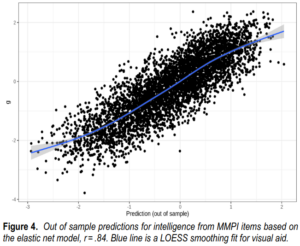
Skin color (lightness or brightness) has been used as a proxy for genetic ancestry for over 100 years. It works alright in many cases. Take this study (Parra et al 2004):
Skin pigmentation is a central element of most discussions on ‘race’ and genetics. Research on the genetic basis of population variation in this phenotype, which is important in mediating both social experiences and environmental exposures, is sparse. We studied the relationship between pigmentation and ancestry in five populations of mixed ancestry with a wide range of pigmentation and ancestral proportions (African Americans from Washington, DC; African Caribbeans living in England; Puerto Ricans from New York; Mexicans from Guerrero; and Hispanics from San Luis Valley). The strength of the relationship between skin color and ancestry was quite variable, with the correlations ranging in intensity from moderately strong (Puerto Rico, ρ = 0.633) to weak (Mexico, ρ = 0.212). These results demonstrate the utility of ancestry-informative genetic markers and admixture methods and emphasize the need to be cautious when using pigmentation as a proxy of ancestry or when extrapolating the results from one admixed population to another.
The correlation was 0.44 in African Americans, but this old study only used a few SNPs to estimate ancestry. Another study (Beleza et al 2013) of people from Cape Verde (islands off the coast of west Africa) reported a correlation of 0.66. The size of the correlation will depend on multiple factors including the amount of admixture (the correlation would be very weak if done on European Americans with negligible African ancestry), and the accuracy of the measurements (few vs. whole genome variants, objective skin brightness in a non-tanned area vs. self or interviewer report).
That aside, there is a sizable literature in sociology arguing that societies are very racist and this discrimination is based mainly on skin pigmentation. They publish studies with titles like “The Persistent Problem of Colorism: Skin Tone, Status, and Inequality“. Of course, there is a question of why it is so related. The hereditarians have used it mainly as a proxy for genetic ancestry and thus looked for correlations with intelligence. Richard Lynn reported a correlation of 0.17 in a 2002 study.
It would be interesting to note how well such findings generalize. Our studies of ancestry at the national and subnational levels suggest it replicates fairly well:
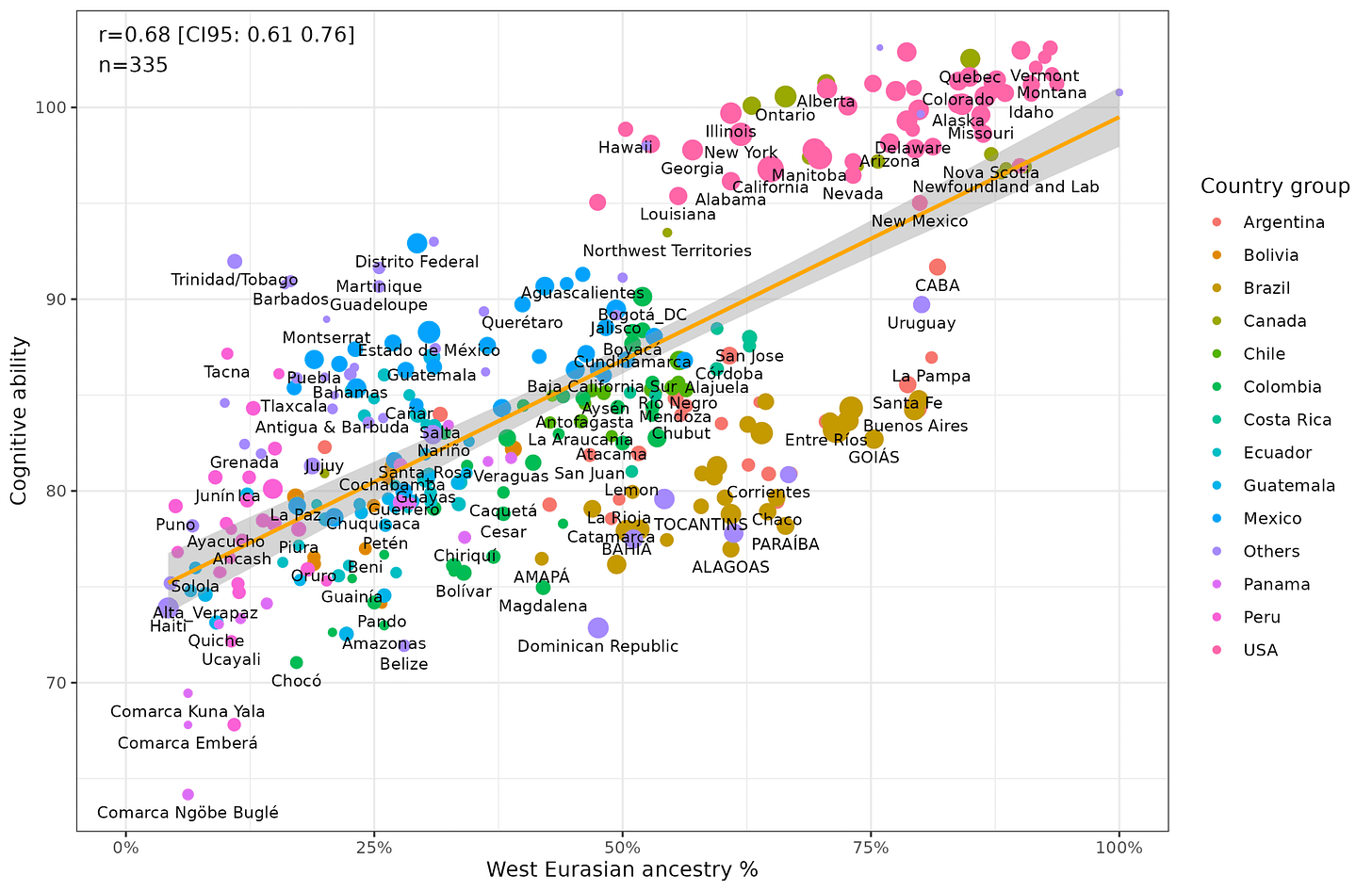
But these aggregate data may be misleading for findings concerning individuals. So I sought a dataset that has skin color — any measure — and intelligence — also any measure — for a number of countries. LAPOP (Latin American Public Opinion Project) gives some public data. Among them, there are some questions that measure intelligence, if poorly:
- gi1: “Name of the US President” (correct = name the current US president) – 87% get it right (pass rate)
- gi2: “Name of the President of the [country’s] National Assembly / Parliament” (country-specific person) – 52% pass rate
- gi3: “How many states does the United States have?” (50) – 71% pass rate
- gi4: “How long is the [presidential / prime-ministerial / government’s] term of office in [country]? (country-specific number) – 87% pass rate
- gi5: “What is the name of the president of Brazil?” (varies) – 35% pass rate
- gi7: “How many representatives/members/MPs does the lower house (or parliament/congress) have? (country-specific number) – 18% pass rate
- gix4: “On which continent is Nigeria?” (Africa) – 58% pass rate
Even if they were all given in each wave, it would be a pretty bad intelligence test. But actually each wave only had a subset of them, making it a positively terrible test. Nevertheless, it is better than nothing. Skin color was not measured objectively but rather using an interviewer scale that looks like this:
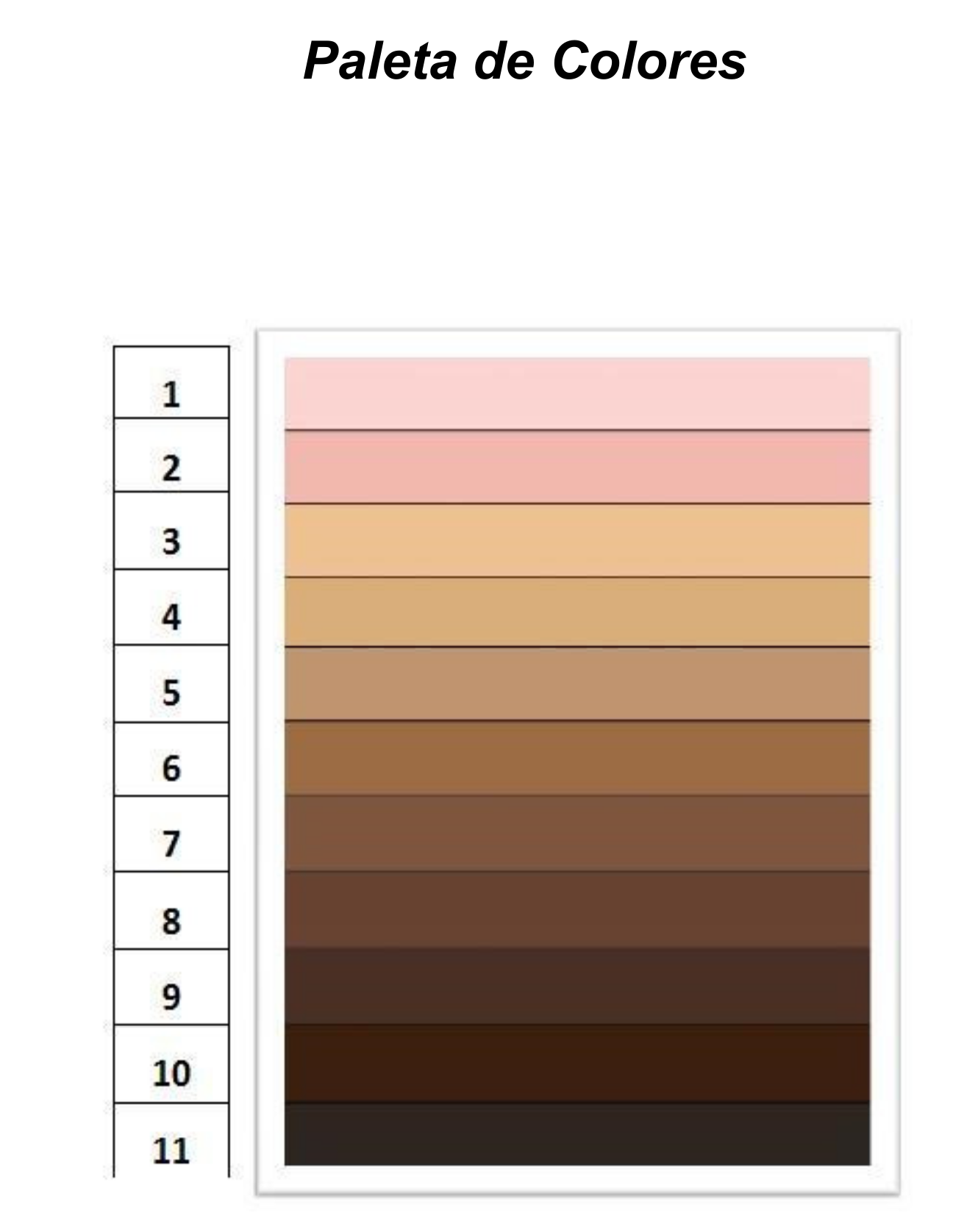
It’s not great because human sight is not flawless, sun exposure changes the color of the skin, and interviewers might be influenced by other factors, for instance, responses during the interview. Nevertheless, this method has been used in many surveys. So combining these two measures, we can score our very primitive intelligence test as the % correct answers of the ones in the given survey and correlate it with the skin color variable:
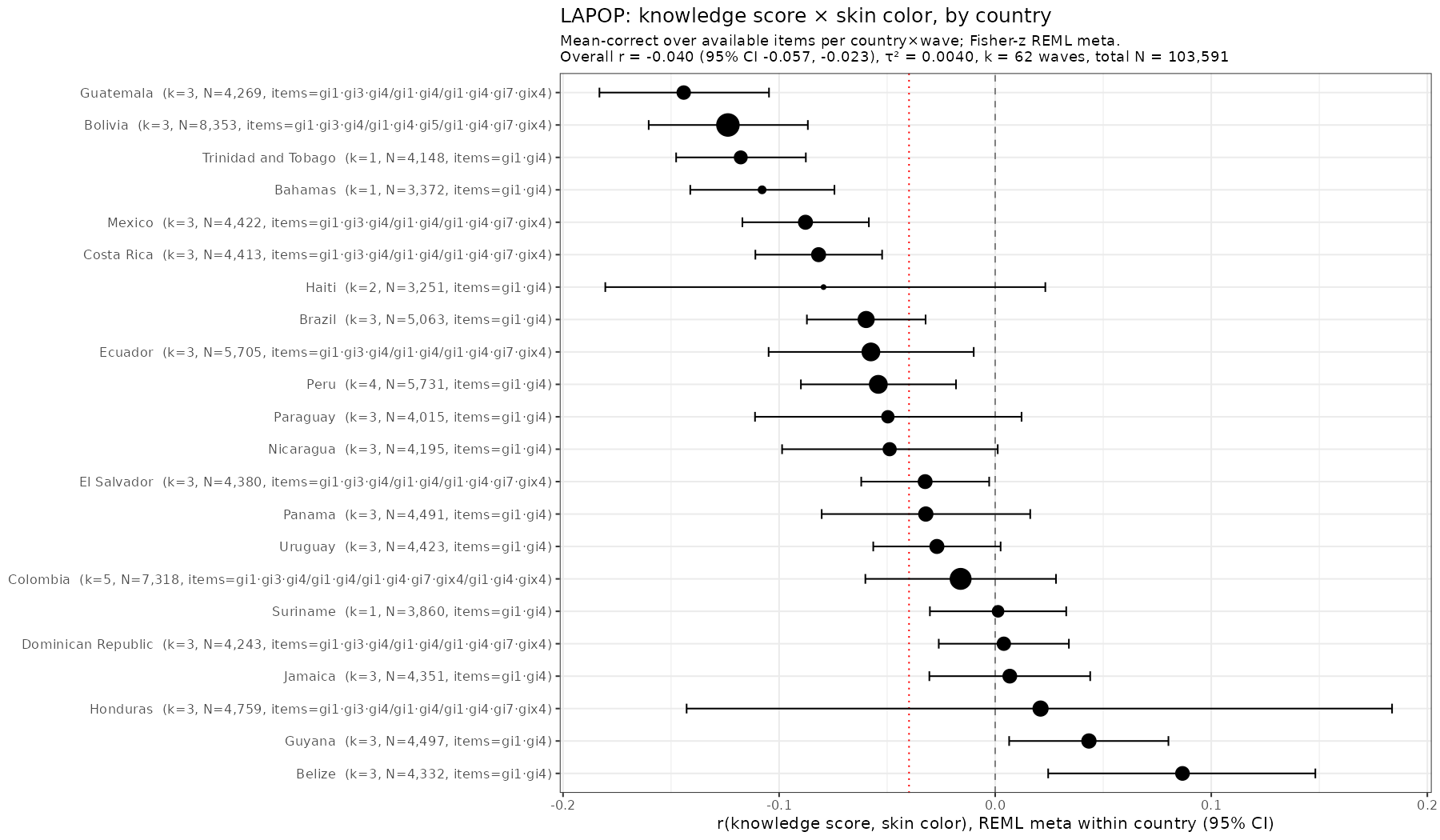
The correlation is overall very weak as might be expected from the terrible measures, -0.04. More strange is that 2 countries show a positive correlation larger than expected by chance (Guyana and Belize) and others show nominally positive correlations. Guyana perhaps has an explanation. Generally speaking, lighter skin correlates with more European ancestry relative to something else, usually African (in USA) or Amerindian (most Latin America). However, if there is not a lot of European ancestry in the population, lighter skin becomes a proxy for whichever ethnic group is the lightest. Guyana is in Latin America but the largest ethnic group is actually Indians at 40%. The data for the ethnic groups in the country are:
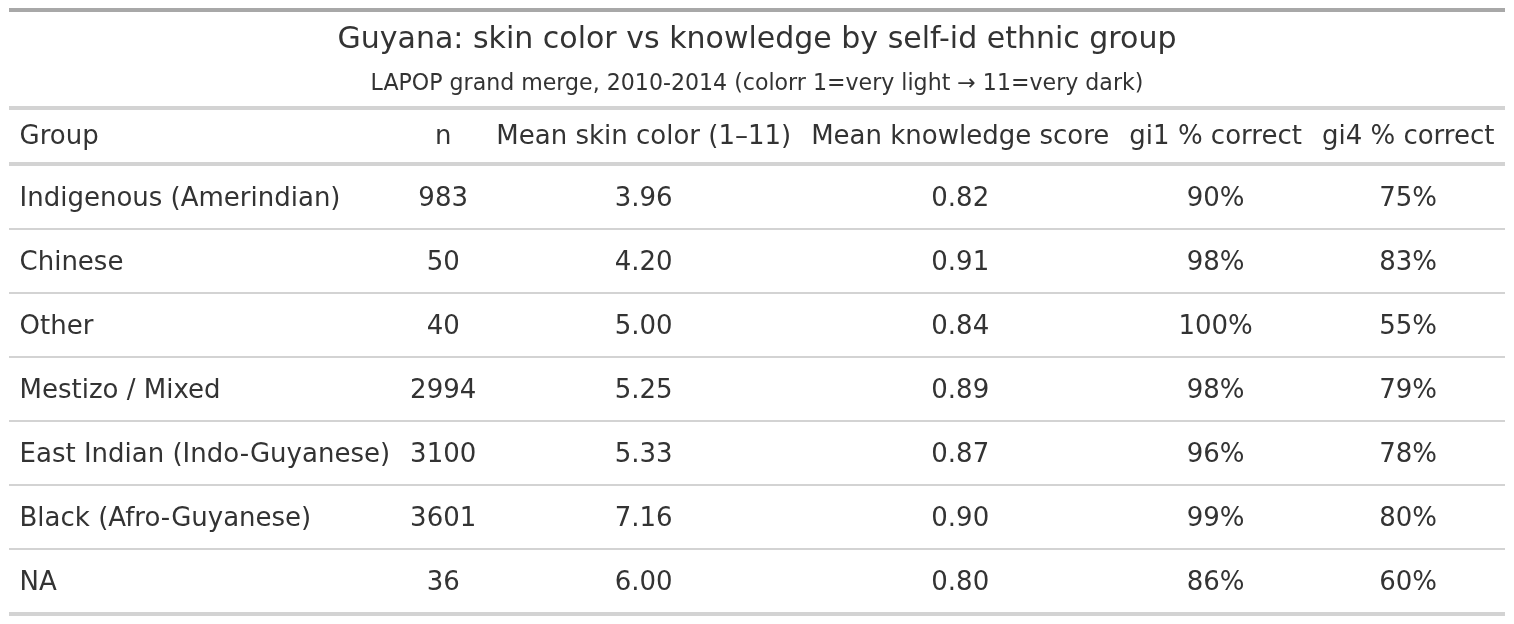
So in this case, the lightest group is somehow the Amerindians who also have among the lowest knowledge score, thus giving the reversed correlation (Suriname has the same kind of ethnic groups and has a null relationship). In general, the test is too easy with a general pass rate close to 90%. Somewhat surprisingly, the Africans performed quite well on the test, almost as well as the small Chinese sample (n=50).
Concerning Belize, a tiny country in central America:
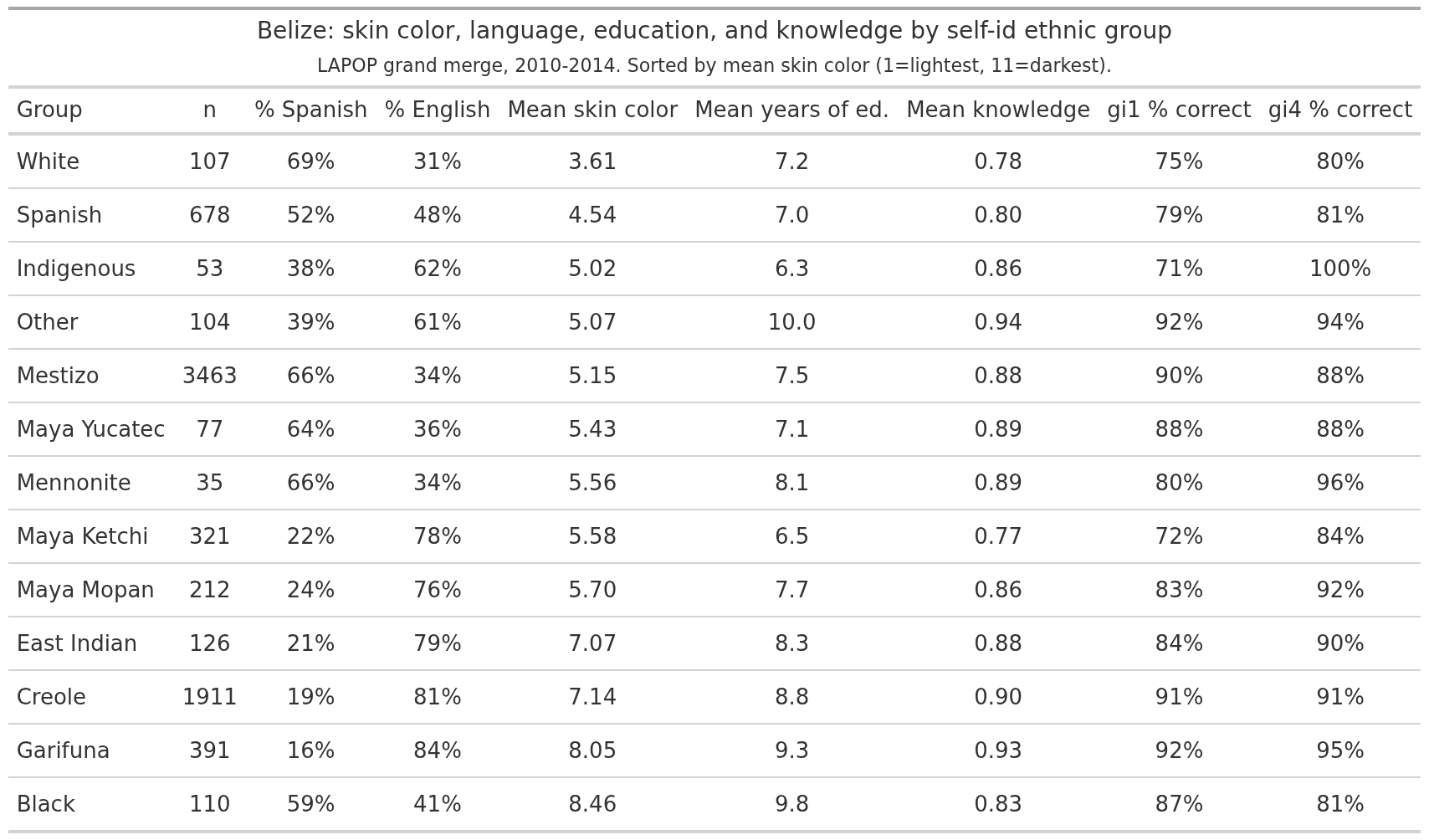
There is a European/Spanish group, which has the lightest skin, but the lowest cognitive scores. The most obvious explanation I could find was language bias, as the European groups appear to speak Spanish and thus may not read so much English news and thus score lower on the question regarding the US president. But fitting a linear model didn’t show this to be that true: the effect of Spanish language was -0.03 whereas the effect of White/Spanish was -0.10. Language bias cannot explain the lower European performance here. I wasn’t able to find any other data to cross-check this finding with, but the educational attainment proxy checks out, the Europeans there really are quite poorly performing. Perhaps the above average Europeans left a long time ago and this is whatever remains.
Honduras is right next door to Belize, and the plot shows it has a massive uncertainty. Why is that? Well because the correlations were -0.03 in 2010, -0.09 in 2012, but 0.18 in 2014 (!). These values are mutually incongruent, so what is going on? First, I thought it may be item related (since they used different items in 2014), so I fit logistic model for each item in each wave:
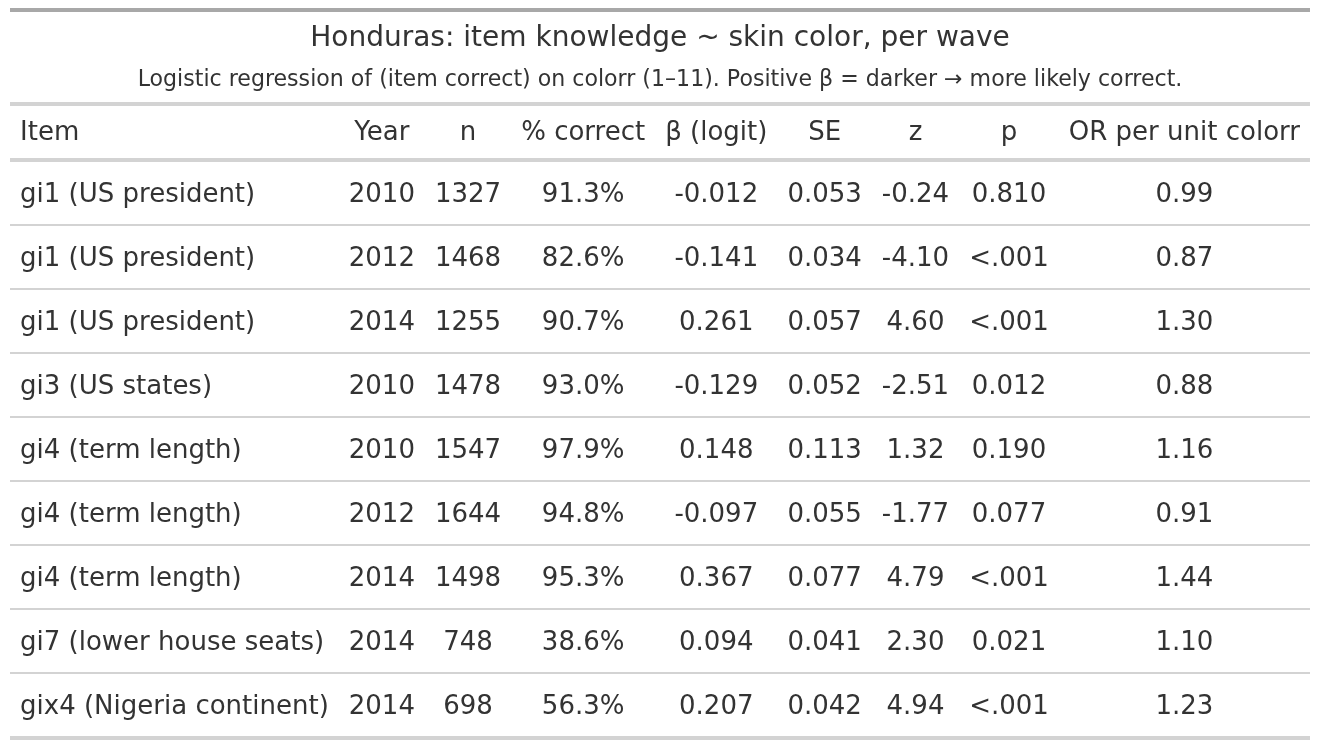
So no, even the same items flip between 2010-2012 and 2014. Mysterious. Maybe they reversed the scale by accident?:
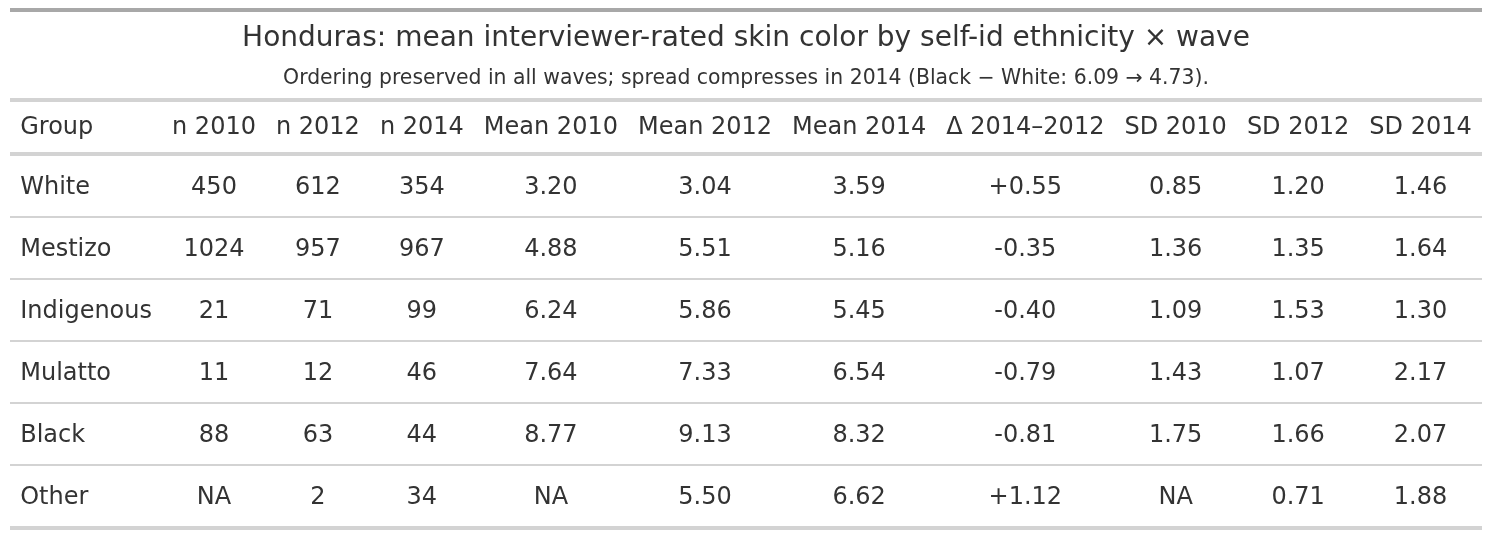
No, the Whites are the lightest in every wave, but the scale itself is changing. The (self id) Whites got 0.55 darker, and the other groups all got lighter. Very strange stuff. It appears it got fashionable to report being something else. Or maybe the sampling methods changed. I don’t know what is happening here either.
I think the main take-away message from this is that using skin color as rated by an interviewer is not a very good way to study race in Latin America. It does show the overall negative correlation, but as these case studies show, the interpretation can be very difficult as any kind of proxy for consistent genetic ancestry, at least within countries.